What worked last year won’t win in 2026.
The world is evolving faster than most business strategies can keep pace.
AI is reshaping how we communicate, automate, and sell.
Customer expectations are shifting daily.
And the workforce — your greatest asset — is rethinking what loyalty means.
Yet too many leaders are still planning around their people instead of with them.
The difference between leading and lagging in 2026 will come down to this: how deeply you integrate employee experience (EX) and customer experience (CX) into your business strategy — not as a “nice to have,” but as the core engine that drives growth, innovation, and loyalty.
The Stakes: Why EX + CX Are Your Growth Engines
Employee Experience (EX): The Inside Advantage
- Only 36% of employees report feeling truly engaged, and just 24% say they experience psychological safety at work. (Gallup)
- In 2025, 87% of IT professionals said a strong digital employee experience positively affects productivity and satisfaction. (Ivanti 2025 Report)
- The cost of replacing a disengaged employee ranges from 50% to 200% of their annual salary. (SHRM)
When engagement drops, so does performance, innovation, and retention. A thriving culture doesn’t just keep people — it fuels excellence.
Customer Experience (CX): The External Advantage
- Companies that lead in CX grow revenue 80% faster than competitors. (SuperOffice)
- 86% of buyers will pay more for a better experience. (PwC)
- Over 50% of customers will abandon a brand after just one bad experience.(Zendesk)
Customer experience is no longer a department — it’s a business discipline. And it’s the key differentiator in every industry.
The bridge between EX and CX?
Your people deliver your promise.
When they feel empowered, your customers feel it too.
The Mistake Most Leaders Make
Too many organizations still plan in isolation:
✔️ Strategic goals are set.
✔️ Budgets are approved.
✔️ KPIs are locked.
Then — only after the plan is built — someone says, “Oh, we should probably include training, engagement, or customer feedback.”
That’s backwards.
When you treat EX and CX as afterthoughts instead of design inputs, you build a plan that looks great on paper — but doesn’t inspire people in practice.
A strategy that doesn’t include your people or your customers isn’t a strategy. It’s a spreadsheet.
The Tactical Game Plan: How to Embed EX + CX Into Your 2026 Strategy
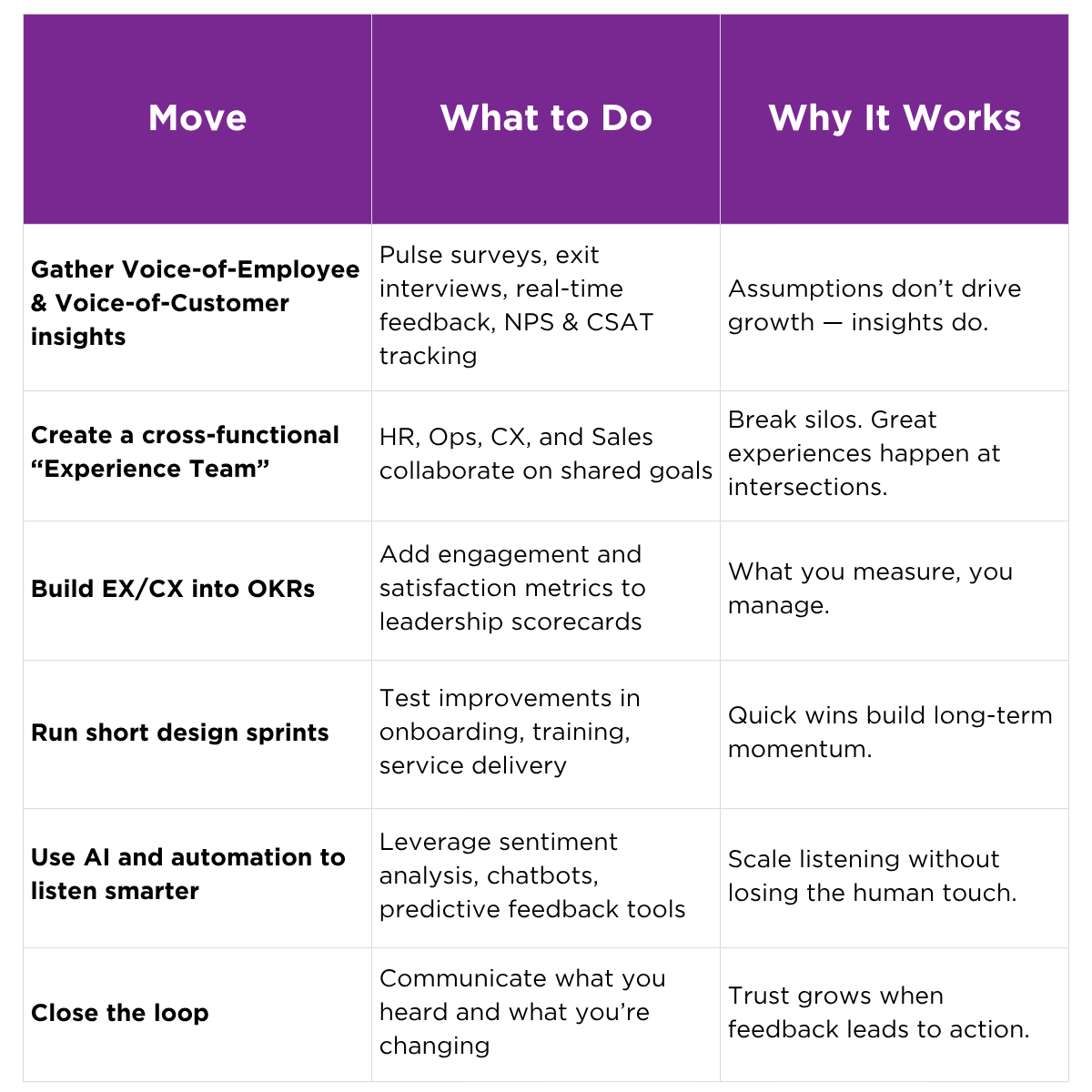
Start small — pilot, learn, refine. Momentum builds trust, and trust builds transformation.
From Service to Hospitality: The Hidden Advantage in Every Industry
Most organizations know how to deliver service.
Very few know how to deliver hospitality.
Here’s the difference:
Service is transactional — it’s the checklist, the workflow, the steps that keep business moving.
Hospitality is transformational — it’s how you make people feel while you deliver that service.
Service gets the job done.
Hospitality builds a relationship.
And here’s the truth: every business is in the experience business — whether you’re building homes, leading a tech company, managing a municipality, running an association, or growing a small business.
When a customer walks through your door, a client joins a Zoom call, a resident calls your office, or an employee clocks in for their shift — those aren’t just moments of service.
They’re moments of hospitality.
It’s the difference between saying:
“Here’s the update you asked for.”
and
“I wanted to reach out before you had to ask — here’s where we’re at, and I think you’ll love what’s coming next.”
Same transaction. Entirely different feeling.
And feelings drive loyalty — not just efficiency.
According to Gallup, companies that create strong emotional connections with customers outperform competitors by 85% in sales growth.
And when employees feel valued, supported, and equipped, their ability to deliver exceptional experiences multiplies.
That’s why employee experience and customer experience are inseparable.
A disengaged employee can’t deliver a remarkable customer experience.
But when your people feel appreciated and empowered, that energy radiates outward — creating what I call a crystallized experience that strengthens over time.
Too often, I hear leaders say:
“We had someone who’d been with us for 15 years. They left for a few dollars more an hour — and the day they quit, we sent flowers.”
That’s not retention — that’s regret.
We’re celebrating people on their way out instead of designing experiences that make them never want to leave.
The solution isn’t more perks or pizza Fridays.
It’s intentional culture design — workplaces and customer relationships where people feel seen, heard, and valued.
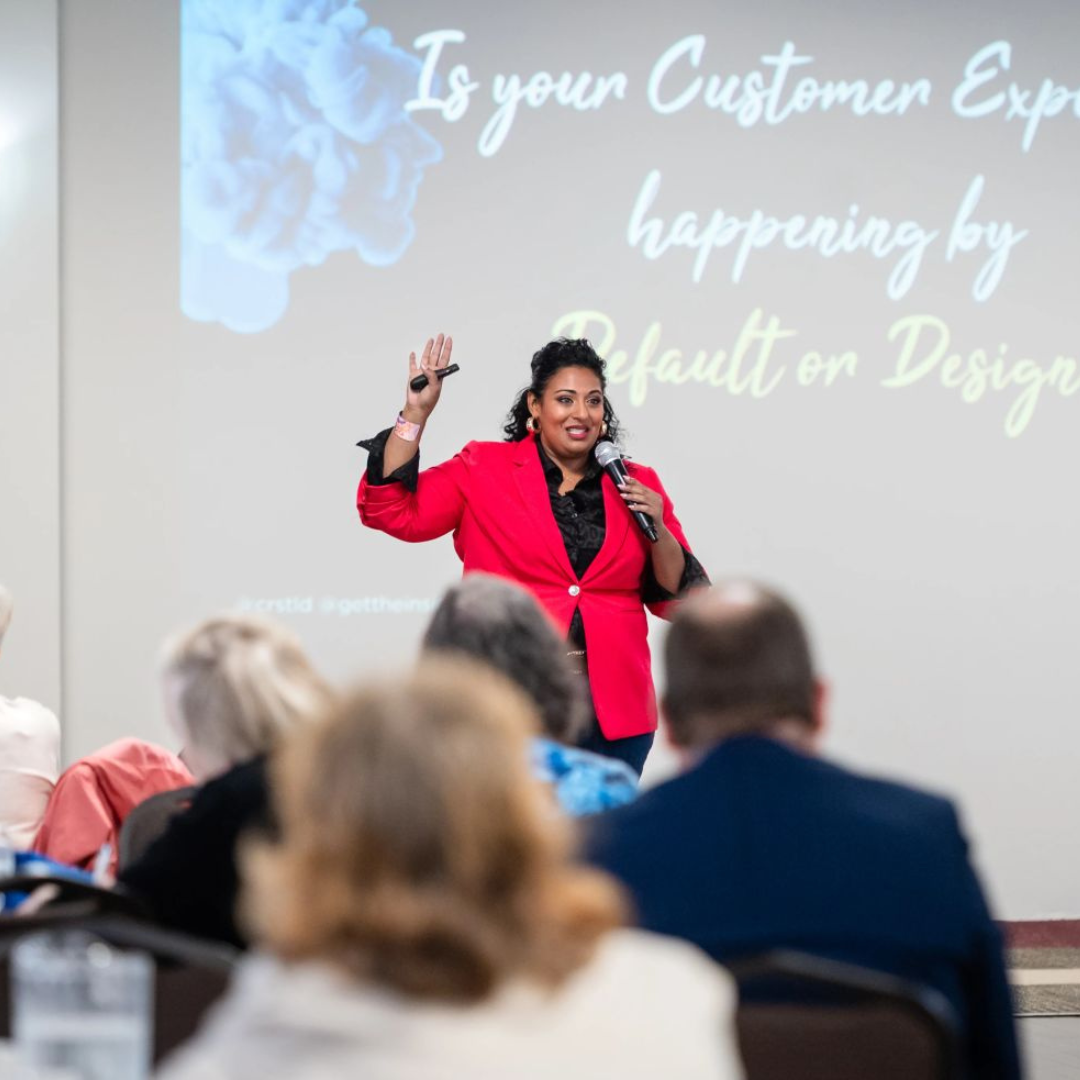
Because when your people feel taken care of, your customers will too.
That’s not just service.
That’s hospitality in hard hats, headsets, and high heels — and it’s your next competitive advantage.
What’s at Risk If You Don’t Act
- Rising turnover and training costs
- Lower customer loyalty and brand trust
- Declining innovation and internal morale
- Stagnant revenue growth in a fast-changing market
2026 will belong to businesses that invest in their people, listen deeply to their customers, and design cultures of loyalty from the inside out.
Your Opportunity: Free 90-Minute Strategy Session (Limited Time Offer)
If you and your leadership team are serious about building a 2026 strategy rooted in employee experience, customer experience, and culture design, I’d love to help you make it happen.
From now until December 15, 2025, I’m offering a complimentary 90-minute strategy session — no sales pitch, no pressure.
Just practical insight, customized for your organization.
During this private session, we’ll:
✔️ Assess your current EX + CX strengths and gaps
✔️ Identify quick-win engagement opportunities
✔️ Map your next steps for a thriving 2026
✔️ Explore how AI, loyalty programs, and culture design can future-proof your business
Spaces are limited and will fill quickly — reserve yours before December 15.

Final Thought
Planning for 2026 without integrating employee experience, customer experience, and hospitality-level culture design is like building a house without a foundation.
The structure might stand — but it won’t last.
If you want to create a business that grows stronger year after year, start with the experiences you design for your people and your customers.
That’s where trust is built.
That’s where loyalty lives.
And that’s how you lead the shift, not chase it.